

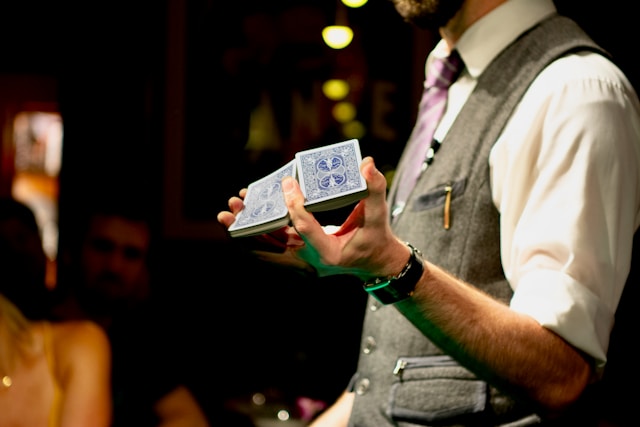
There’s a moment at every great party when the room goes quiet, someone gasps, and then everyone bursts out laughing. That’s the comedy magician at work—and it’s harder to pull off than it looks.
Comedy magicians occupy a fascinating space between two demanding art forms. They need to construct tight, technically impressive illusions while simultaneously landing jokes with the timing of a seasoned stand-up. The result, when done well, is one of the most entertaining performances money can buy.
But what exactly does a comedy magician do? How do they structure their show, who do they perform for, and what separates a good one from a truly great one? This post breaks it all down.
More Than a Magician Who Tells Jokes
The easiest misconception about comedy magicians is that they’re simply magicians who crack a few one-liners between tricks. That misses the point entirely.
A comedy magician’s performance is a carefully engineered experience where the magic and the humor are inseparable. The trick isn’t the punchline—it’s the setup. The laugh isn’t the payoff—it’s part of the illusion. Every misdirection, every planted assumption, every “wait, how did that happen?” moment is built to deliver both wonder and laughter at the same time.
This requires a very specific skill set. A comedy magician must write and refine material like a comedian, rehearse sleight of hand like a classical magician, and read a room like an improv performer. The three disciplines feed into each other constantly.
What a Typical Performance Looks Like
Comedy magicians perform across a wide range of settings—corporate events, weddings, private parties, theaters, comedy clubs, and cruise ships. The structure of a show can vary depending on the venue and audience, but most performances follow a recognizable arc.
Opening Strong
The first few minutes of a comedy magic show are critical. A skilled performer establishes their personality quickly, earns the audience’s trust, and signals early that this won’t be a typical magic show. Many comedy magicians open with a self-deprecating joke or a deliberately “failed” trick that’s actually going exactly to plan.
Building Audience Participation
Audience interaction is one of the defining features of comedy magic. Unlike theatrical magic, which tends to keep spectators at a safe distance, comedy magic thrives on bringing people into the act. Volunteers are chosen, often with exaggerated ceremony, and then placed in situations that are inherently funny—being asked to hold something unusual, being made to look like the trick is their fault, or being used as an unwitting prop.
This participation creates shared experiences that the whole audience bonds over. When someone is gently embarrassed or surprised, the laughter is rooted in genuine human reaction, not just a scripted punchline.
Signature Tricks and Running Gags
Most comedy magicians develop a repertoire of signature pieces—tricks they’ve refined over hundreds of performances and built specific comedic narratives around. A running gag might develop across the show, returning at unexpected moments to build on the audience’s growing familiarity. These callbacks are a staple of good comedy writing, and comedy magicians use them to create a sense that the show has structure and payoff.
Closing with Impact
A strong close is essential. Comedy magicians typically save their most impressive illusion for the finale, often weaving together threads from earlier in the show for a satisfying, surprising conclusion. The final moment needs to land emotionally—leaving the audience both genuinely mystified and genuinely delighted.
The Skills Behind the Craft
What makes a comedy magician’s job so demanding is the breadth of skills required. Here’s a closer look at what goes into the work.
Sleight of Hand and Technical Skill
The magic still has to work. No amount of charm compensates for a poorly executed trick. Comedy magicians practice card handling, coin work, mentalism, and close-up illusions to the same standard as any serious magician. The humor is layered on top of—not instead of—technical ability.
Comedy Writing
Most comedy magicians write their own material. They study comedic structure, timing, and audience psychology the same way stand-up comedians do. Jokes are tested, rewritten, cut, and refined constantly. A routine that gets a laugh 80% of the time is considered a strong piece of material.
Stage Presence and Physicality
In live performance, how you move matters as much as what you say. Comedy magicians use body language, facial expressions, and physical timing to amplify jokes and misdirect audiences simultaneously. A well-timed pause, a raised eyebrow, or a stumble that looks accidental can generate a bigger laugh than any scripted line.
Improvisation
No matter how well-rehearsed a show is, live performance is unpredictable. Audience members say unexpected things, volunteers don’t behave as anticipated, and technical issues happen. Comedy magicians need to improvise confidently, turning unexpected moments into some of the best parts of the show.
Reading the Room
Different audiences require different approaches. A corporate dinner crowd behaves very differently from a late-night comedy club audience. Comedy magicians adjust their tone, language, pacing, and material selection based on the energy in the room—often making these decisions in real time.
Who Hires a Comedy Magician?
Comedy magicians are versatile entertainers, which makes them popular across a variety of event types.
Corporate Events: Comedy magic works especially well at corporate events because it’s inclusive, crowd-friendly entertainment that doesn’t rely on niche humor. It appeals to mixed audiences, keeps people engaged during dinners or award ceremonies, and leaves guests talking about the event long after it’s over.
Weddings: A comedy magician can perform close-up magic during cocktail hour, keeping guests entertained while the wedding party takes photos. Some performers also do a stage set during the reception, providing a memorable entertainment moment that doesn’t require guests to sit through a lengthy traditional show.
Private Parties and Birthdays: From intimate dinner parties to milestone birthday celebrations, comedy magicians bring energy and interaction to any gathering. Their ability to work the room table by table means no one feels left out.
Theaters and Comedy Clubs: More established comedy magicians tour their own shows through theaters and comedy venues. These one-person shows are longer, more narrative-driven, and often showcase the performer’s full range of skills.
Schools and Family Events: Some comedy magicians specialize in family-friendly performances, adapting their material to suit younger audiences while keeping parents entertained. The combination of silliness and wonder makes it a natural fit for school events, birthday parties, and festivals.
How Comedy Magic Differs From Traditional Magic
Traditional stage magic tends to be theatrical, mysterious, and visually spectacular. Think large illusions, dramatic music, and a sense of the supernatural. The magician is often presented as a figure of wonder—someone with special powers or knowledge.
Comedy magic flips this dynamic. The performer is typically more self-aware, more relatable, and more willing to acknowledge the absurdity of what they’re doing. The mystery is still there, but it’s filtered through humor. The audience is laughing and wondering at the same time, which creates a uniquely engaging emotional state.
There’s also a strategic advantage to comedy. When an audience is laughing, their analytical thinking drops. This makes them more susceptible to misdirection—which means comedy magic can often be more technically deceptive than its serious counterpart, even though it appears more casual.
What to Look for When Booking a Comedy Magician
If you’re considering booking a comedy magician for an event, a few things are worth keeping in mind.
Watch demo footage carefully. A good comedian magician will have video from real performances—not polished studio recordings. Real audience reactions tell you far more than a slick promo reel.
Check their adaptability. Ask how they tailor their show for different audiences. A strong performer should be able to explain exactly how they adjust content for a corporate crowd versus a private celebration.
Understand their format. Comedy magicians can offer close-up magic, stage shows, or both. Make sure the format matches your event setup. A close-up performer won’t have the same impact in a room of 300 people as someone doing a stage set.
Ask about their experience with your type of event. Performers who regularly work corporate events will understand things like stage fright in volunteers, the importance of clean material, and keeping shows within strict time limits.
The Unspoken Artistry
What audiences rarely appreciate in the moment—because they’re too busy laughing—is the sheer amount of invisible work that goes into a great comedy magic performance. Every laugh was placed there deliberately. Every moment of surprise was engineered. The volunteer who looked like they were causing chaos was guided there gently from the start.
Comedy magicians spend years honing material, studying technique, and developing the kind of stage presence that makes everything look effortless. That effortlessness is the point. The best performances feel spontaneous and alive precisely because the performer has done them so many times that they can adapt fluidly to any room, any crowd, any unexpected moment.
Finding the Right Fit for Your Event
A comedy magician is one of the most versatile live entertainment options available. They combine two proven crowd-pleasers—magic and comedy—into a single seamless act that works across audiences and event types.
Whether you’re planning a corporate dinner, a wedding, or a private celebration, the right comedy magician won’t just fill time on the program. They’ll create the moment everyone talks about on the way home.
Start by searching for performers with strong live footage, clear audience reactions, and experience in your type of event. The difference between a good booking and a great one often comes down to fit—and the best comedy magicians will help you figure that out long before the night itself.


